L190 Junction Reconstruction, Hohenems
Feldkirch, Austria / 2025
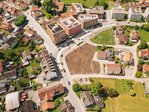
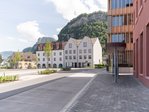
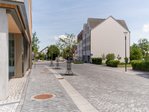
As part of the infrastructural development of the town hall district in Hohenems, the existing junction of the L190 (Vorarlberger Straße) with Radetzkystraße and Diepoldsauerstraße was comprehensively rebuilt and modernised. The aim of the project was to improve traffic flow, enhance road safety and adapt the road infrastructure to future urban development in the surrounding area.

Facts & Figures
Company
Nägele Hoch- und Tiefbau GmbH
Type
Road construction, Paving, Structural engineering, Baugrubensicherung, Foundations
Runtime
2025
Modernisation and reorganisation of the town hall district
The construction project encompassed both traditional roadworks and extensive concrete works. During implementation, the existing junction was reorganised and adapted to the changed requirements. In addition to the redesign of the carriageways, pavements, traffic areas and the lighting infrastructure were also renewed or newly constructed. A key component of the project was the construction of a connecting tunnel in the area of the town hall quarter. This required extensive excavation work using sheet piling, as well as appropriate excavation support. The excavation was carried out on three sides using braced sheet piling.
Particular challenges arose due to the existing utilities and cables belonging to various utility providers (e.g. electricity, telecommunications, gas and water) within the construction area. In the course of the construction work, some of these had to be rerouted, secured or temporarily suspended. Coordination with the respective utility providers and ensuring the continued functionality of existing infrastructure formed a key part of the construction work. In addition, modifications were made to the existing lighting system and the road drainage system. These facilities were partially dismantled or adapted during the construction phase and restored accordingly once the works were completed.
Construction was carried out whilst maintaining traffic flow, which placed increased demands on construction phase planning and traffic management. The aim was to minimise disruption to local residents and road users as much as possible.
Overall, the project represented a complex inner-city infrastructure scheme in which road construction, civil engineering, utility coordination and traffic management were closely interlinked.