Kraków-Prokocim University Hospital
Krakau-Prokocim, Poland / 01.2015 - 05.2019
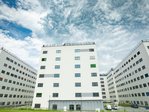
In Kraków, PORR, in a joint venture with VAMED and WARBUD, built one of Europe’s largest university hospitals within 50 months.

Facts & Figures
Company
PORR S.A.
Type
Healthcare, Healthcare facilities
Runtime
01.2015 - 05.2019
Construction of the Kraków-Prokocim University Hospital.
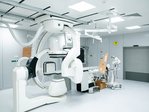
The hospital has a capacity of 925 beds, 24 operating theatres, 27 specialist clinics, 69 departments and laboratories. In addition, there is an auditorium seating 250 people, two lecture theatres seating 50 people each, and numerous seminar rooms.
Plans for the construction of a university hospital in Kraków date back to the 1950s. At that time, the management of Jagiellonian University decided to build a new campus in Prokocim. However, it was not until 2013 that the University Senate gave the go-ahead for the construction of the new hospital. The tender was issued in July 2013, and the contract was awarded to a consortium comprising PORR, VAMED and WARBUD. Whilst PORR and WARBUD were responsible for the construction of the hospital, VAMED handled the supply and installation of the medical equipment.
Following an extensive planning and preparation phase, construction work began in January 2015. First, the multi-storey car park was completed, followed by the main hospital building. The hospital complex is complemented by several ancillary buildings and infrastructure facilities such as a power supply station, a helipad, a sewage treatment plant, a medical gas decompression unit, a kitchen and a laundry. To comply with the energy efficiency guidelines coming into force in Poland from 2021, the external walls were insulated to a greater extent than is currently standard in Poland; furthermore, windows and façades with a higher degree of thermal insulation were installed. In addition, a solar system for hot water production was installed on the roof. This has significantly increased energy efficiency.
Great importance was also attached to state-of-the-art facilities and systems in the multifunctional building. For example, a pneumatic mail system with 56 stations allows blood samples, medicines or documents to be transported rapidly throughout the entire hospital. And a real-time location system (RTLS) is used to identify and monitor the whereabouts of patients. In emergencies, patients can also use these tags to contact medical staff immediately.